

Chicago to Dallas is one of the great Midwest-to-Texas corridors — and unlike the coastal exits, it’s not really about housing being cheaper. It’s about keeping more of your paycheck, ditching the winter, and landing in one of the hottest job markets in America. Here’s the honest, data-backed guide.
The migration story: the Midwest heads to Texas
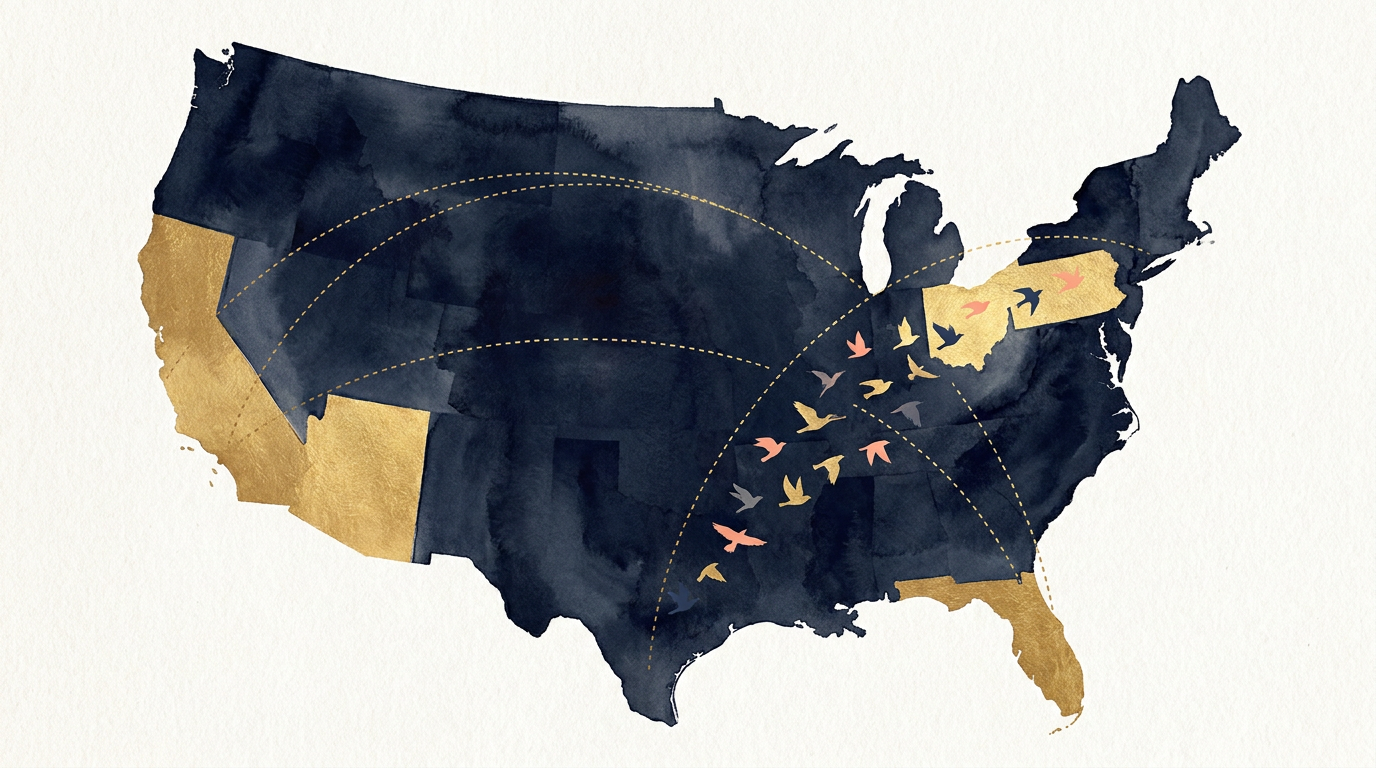
Illinois consistently ranks among the states losing the most residents to interstate migration, and Texas is the nation’s single biggest gainer — the two ends of one of the country’s steadiest flows. Chicagoans are a large share of it, drawn by the same trio: no state income tax, a booming job market, and an escape from the winters.

Why Chicagoans make the move: the math
Taxes & cost
Texas has no state income tax; Illinois charges a 4.95% flat rate on every dollar. On a $150,000 income that’s roughly $7,400 a year back in your pocket — more as you earn more. Illinois also carries some of the highest property taxes in the nation, so even though Dallas property taxes are high, the swap isn’t as lopsided as it looks.
| Category | Chicago | Dallas | Takeaway |
|---|---|---|---|
| Median home price | ~$300,000–$370,000 | ~$410,000–$500,000 | Comparable (DFW a bit higher) |
| State income tax | 4.95% flat | 0% | Texas advantage |
| Winters | Long, harsh | Mild | Major lifestyle shift |
| Job growth | Slower | Among U.S. leaders | Dallas advantage |
Both cities carry high property taxes; model the specific rate on any home before you buy.
Where to land in Dallas: a neighborhood guide
Uptown Young professionals
Walkable, high-rise, high-energy living along McKinney Avenue — the closest thing to a dense urban core, with nightlife and dining. Rents run to ~$2,400.
Lakewood Families
Tudor and Craftsman homes on tree-lined streets near White Rock Lake, strong schools, walkability. The consensus family pick.
North Oak Cliff Retirees / quiet
Peaceful and affordable, near Methodist Dallas Medical Center, with parks and golf. A low-traffic landing spot.
Garland & Lake Highlands Best value
The same square footage here saves roughly $12,000–$15,000 a year versus Uptown — ideal for budget-minded buyers coming from Chicago.
Jobs and the economy
Dallas-Fort Worth is one of the strongest job markets in the country. The metro recently added 14,000+ tech jobs (total tech employment ~243,000), with average tech pay around $121,700 (up 4.5% year over year) and AI engineering the fastest-growing role. Healthcare, logistics, and financial services anchor hiring, and DFW is home to a dense cluster of Fortune 500 headquarters — deep for finance, operations, and corporate roles that Chicago professionals often move laterally into. Registered nurses earn ~$81K–$96K.

Your new home state
Welcome to Texas
The honest trade-offs
- You trade winter for summer. No more shoveling — but weeks of 100°F+ heat and constant A/C.
- Property taxes are high. Like Illinois, Texas leans on property tax; model it before buying.
- Sprawl and driving. DFW is spread out and car-dependent; transit is limited compared to Chicago’s ‘L’.
- Severe weather. Spring brings hail and tornado risk; storms roll through the plains.
- Culture shift. Dallas is newer, more suburban, and more car-social than Chicago’s dense, transit-rich neighborhoods.
Planning the move: logistics, cost, and timing
| Home size | Full-service cost | Container option |
|---|---|---|
| Studio / 1-bedroom | ~$1,800–$2,900 | ~$1,600–$2,800 |
| 2–3 bedroom | ~$3,200–$5,600 | ~$2,800–$4,600 |
| 4+ bedroom | ~$4,800–$7,500+ | ~$4,200–$5,600 |
2026 corridor ranges; vary with weight, timing, access, and add-ons.
Timing: when to move
Fall and spring offer the most comfortable working conditions; January–February and November–December have the best rates. Avoid peak summer heat and spring hail season for delicate items. Book 3–4 weeks ahead off-peak; a mid-week, mid-month pickup can save 10–30%.
Frequently asked questions
How much does it cost to move from Chicago to Dallas?
Full-service moves typically run $2,200–$7,500+ by size: ~$1,800–$2,900 for a 1-bedroom, $3,200–$5,600 for a 2–3 bedroom, and $4,800–$7,500 for 4+ bedrooms.
How far is it and how long does the move take?
About 925 miles — a ~14-hour drive over 2–3 days. Movers quote a 3–7 business-day transit window.
Will I save money moving from Illinois to Texas?
On taxes, yes — Texas has no state income tax vs. Illinois’ 4.95% flat, worth ~$7,400/year on a $150K income. Housing is comparable (Dallas slightly higher), so the real wins are take-home pay, the job market, and milder winters.
What’s the best Dallas neighborhood for families from Chicago?
Lakewood for schools and green space; Garland or Lake Highlands for the same space at $12K–$15K/year less; Uptown for walkable urban living.
When is the best time to move to Dallas?
Fall or spring for comfort; January–February or November–December for the lowest rates. Avoid peak summer heat and end-of-month pickups.
Keep exploring
Sources: IRS Statistics of Income migration data; Tax Foundation analyses; Redfin and local Dallas/Chicago housing data; U.S. Bureau of Labor Statistics and Dallas Regional Chamber workforce data; published 2026 moving-industry corridor estimates. Current as of 2026; verify tax and residency specifics with a licensed professional. Reviewed by the MovingExperts editorial team.