

If you’re weighing a move from Los Angeles to Dallas, you’re joining the single most-traveled relocation corridor in the country. California to Texas moves more people than any other state-to-state route in America — and the LA→Dallas leg is its beating heart. This is the honest, data-backed guide: who’s actually making the move, what the tax and cost math really looks like, exactly where to land in Dallas, and what nobody tells you about the trade-offs.
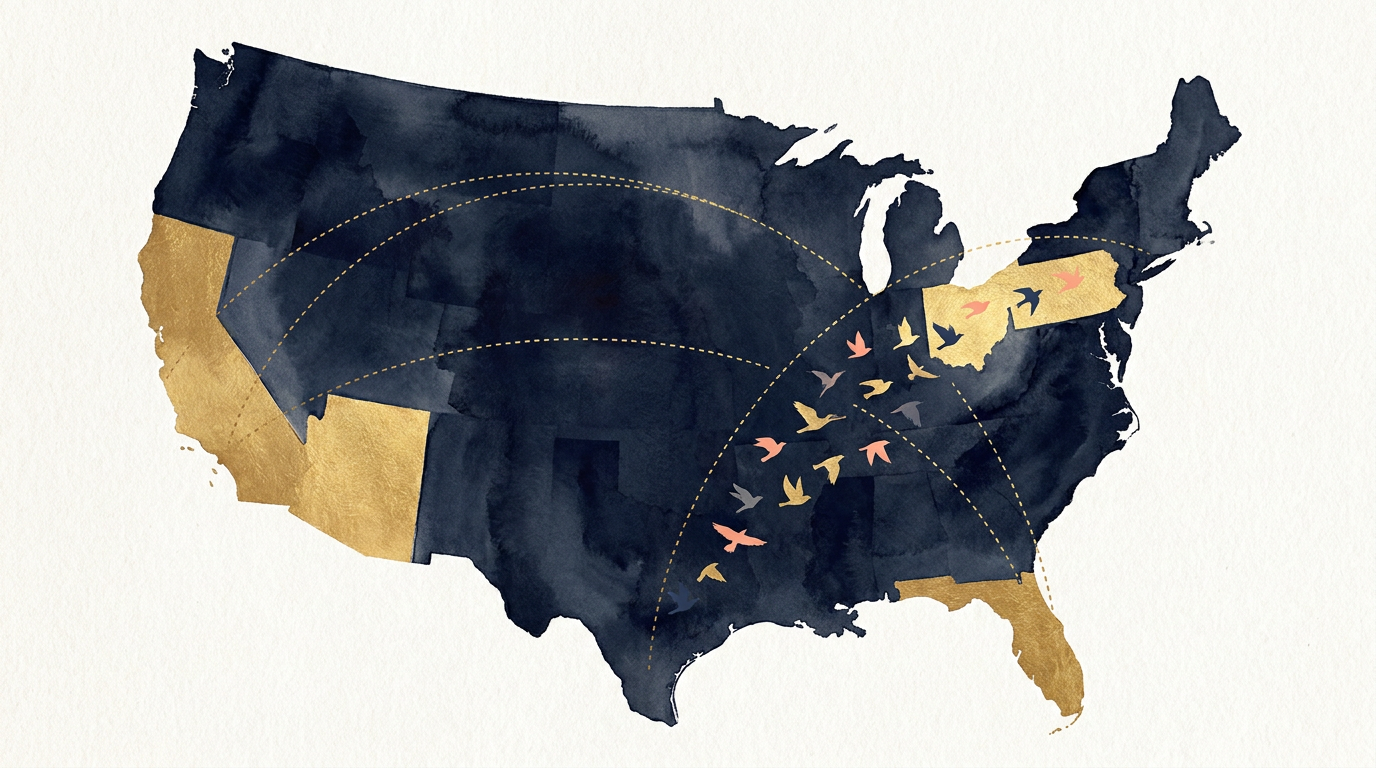
The migration story: California’s biggest export is people
This isn’t a trend piece — it’s the largest interstate flow in the nation. Roughly 102,000 people a year move from California to Texas, more than any other state-to-state route in the country. The IRS, which tracks migration through tax-return address changes, shows the scale: in a single recent year Texas gained a net 56,473 income-tax filers while California lost 100,397 — and with them, a net $11.9 billion in adjusted gross income.

Why Angelenos make the move: the tax and cost math
Two numbers drive most of these decisions: income tax and housing.
Taxes: the difference isn’t marginal
Texas has no state income tax. California has the highest top rate in the nation at 13.3%. That gap compounds fast — a $250,000 household typically saves $15,000–$30,000 a year by moving to a no-income-tax state, and $500,000+ earners can save north of $40,000 annually.
| Household income | Approx. CA state tax | Texas tax | Annual saving |
|---|---|---|---|
| $150,000 | ~$10,000–$12,000 | $0 | ~$10,000+ |
| $250,000 | ~$18,000–$22,000 | $0 | ~$15,000–$30,000 |
| $500,000+ | ~$45,000+ | $0 | $40,000+ |
Illustrative estimates based on published CA rates vs. Texas’s 0% income tax. Individual results vary; consult a tax professional before relying on residency-based savings.
Housing: roughly half the price
California’s median home price sits around $809,000; Dallas’s is roughly $410,000–$500,000 depending on the source and neighborhood. For the same monthly budget, most transplants trade a cramped LA apartment for a house with a yard.
Cost of living: LA vs. Dallas
| Category | Los Angeles | Dallas | Takeaway |
|---|---|---|---|
| Median home price | ~$809,000 | ~$410,000–$500,000 | Roughly half |
| 1-bedroom rent (avg) | $2,300–$2,800 | ~$1,355 | Big drop |
| State income tax | up to 13.3% | 0% | Texas advantage |
| Overall cost index | High-cost coastal | ~101.7 (near U.S. avg) | Notably lower |
Where to land in Dallas: a neighborhood guide
“Dallas” is really Dallas-Fort Worth — a sprawling metro of very different neighborhoods. Here’s how transplants sort themselves:
Uptown Young professionals
Walkable, high-energy, high-rise living along McKinney Avenue — nightlife, dining, and modern apartments. The closest thing Dallas has to an LA urban-core feel. Rents run to ~$2,400, the metro’s priciest.
Lakewood Families
Tudor and Craftsman homes on tree-lined streets near White Rock Lake, with strong schools and walkability. The consensus family pick — charm, green space, community.
North Oak Cliff Retirees / value
Peaceful and affordable, with parks, golf, and easy access to Methodist Dallas Medical Center. A quieter, low-traffic landing spot.
Garland & Lake Highlands Best value
The smart-money picks: the same square footage here saves roughly $12,000–$15,000 a year versus Uptown. Ideal for buyers stretching a budget.
Jobs and the economy
Dallas-Fort Worth is one of the strongest job markets in the country, which is why so many Californians land here with work already lined up. The metro recently added 14,000+ tech jobs (total tech employment ~243,000), with average tech salaries around $121,700 (up 4.5% year over year). AI engineering is the fastest-growing role in the region. Beyond tech, healthcare, logistics, and financial services anchor hiring — the Dallas Medical District, the Richardson Telecom Corridor, and the Frisco–Plano corridor are the densest hubs. Registered nurses earn ~$81K–$96K; the corporate base (many Fortune 500 HQs) keeps finance and operations roles deep.

Your new home state
Welcome to Texas
The honest trade-offs
- Summer is brutal. Dallas heat runs 100°F+ for weeks; A/C is non-negotiable and shapes your utility bill.
- You’ll still need a car. DFW is even more car-dependent and spread out than LA — transit is limited; commutes are highway commutes.
- Weather swings. Dallas is inland (little direct hurricane risk) but gets the “hangover” — inland flooding and spin-off tornadoes from Gulf storms, plus spring hail.
- Property taxes. Among the higher rates in the country — factor it into any home purchase.
- Establish residency correctly. California audits departing high earners; document the move (license, registration, days spent) and get professional advice.
Planning the move: logistics, cost, and timing
What it costs by home size
| Home size | Full-service cost | Container option |
|---|---|---|
| Studio / 1-bedroom | ~$1,950–$3,000 | ~$1,735–$3,000 |
| 2–3 bedroom | ~$3,765–$6,275 | ~$3,000–$5,000 |
| 4+ bedroom | ~$5,205–$8,551 | ~$4,500–$5,865 |
2026 corridor ranges; vary with weight, timing, access, and add-ons. Driving fuel for the 1,435-mile trip runs ~$740–$845.
Timing: when to move
January–February offers the best rates of the year with mild Dallas weather; November–December are underused, comfortable, and cheaper. Spring and fall have ideal weather but peak demand. Avoid August–September (peak heat and Gulf-storm season). Book 3–4 weeks ahead off-peak, 6–8 weeks for a summer or end-of-month move. Picking a mid-week, mid-month date can cut 10–30% off the base rate.
Frequently asked questions
How much does it cost to move from Los Angeles to Dallas?
Full-service moves typically run $2,700–$8,500+ depending on home size — roughly $1,950–$3,000 for a 1-bedroom, $3,765–$6,275 for a 2–3 bedroom, and $5,205–$8,551 for 4+ bedrooms. Moving containers are often cheaper if you pack yourself.
How far is it and how long does the move take?
About 1,435 miles — a ~22-hour drive usually split over 2–3 days. Professional movers quote a 5–10 business-day transit window from LA pickup to Dallas delivery.
Will I save money moving from California to Texas?
Almost certainly if you earn well. Texas has no state income tax vs. California’s 13.3% top rate — a $250K household saves roughly $15,000–$30,000 a year, and housing costs about half. Offsets: higher Texas property taxes and summer A/C.
When is the cheapest time to move to Dallas?
January–February and November–December — low demand, mild weather, and the best rates. Avoid August–September peak heat and end-of-month/weekend pickups.
What’s the best Dallas neighborhood for families moving from LA?
Lakewood is the consensus family pick — strong schools, walkability, and green space near White Rock Lake. Garland and Lake Highlands offer the same space for $12K–$15K/year less.
Keep exploring
Sources: IRS Statistics of Income migration data; Tax Foundation analyses; Redfin and local Dallas housing data; U.S. Bureau of Labor Statistics and Dallas Regional Chamber workforce data; published 2026 moving-industry corridor estimates. Figures current as of 2026 and provided for general guidance; verify tax and residency specifics with a licensed professional. Reviewed by the MovingExperts editorial team.