New York to Orlando has quietly become one of the most-searched relocations in the country — New York homebuyers look to move to Orlando more than to any other metro. This is the honest, data-backed guide: why the move makes financial sense, exactly where to land, the job market waiting for you, and the trade-offs nobody puts in the brochure.
The migration story: New York’s southbound pull
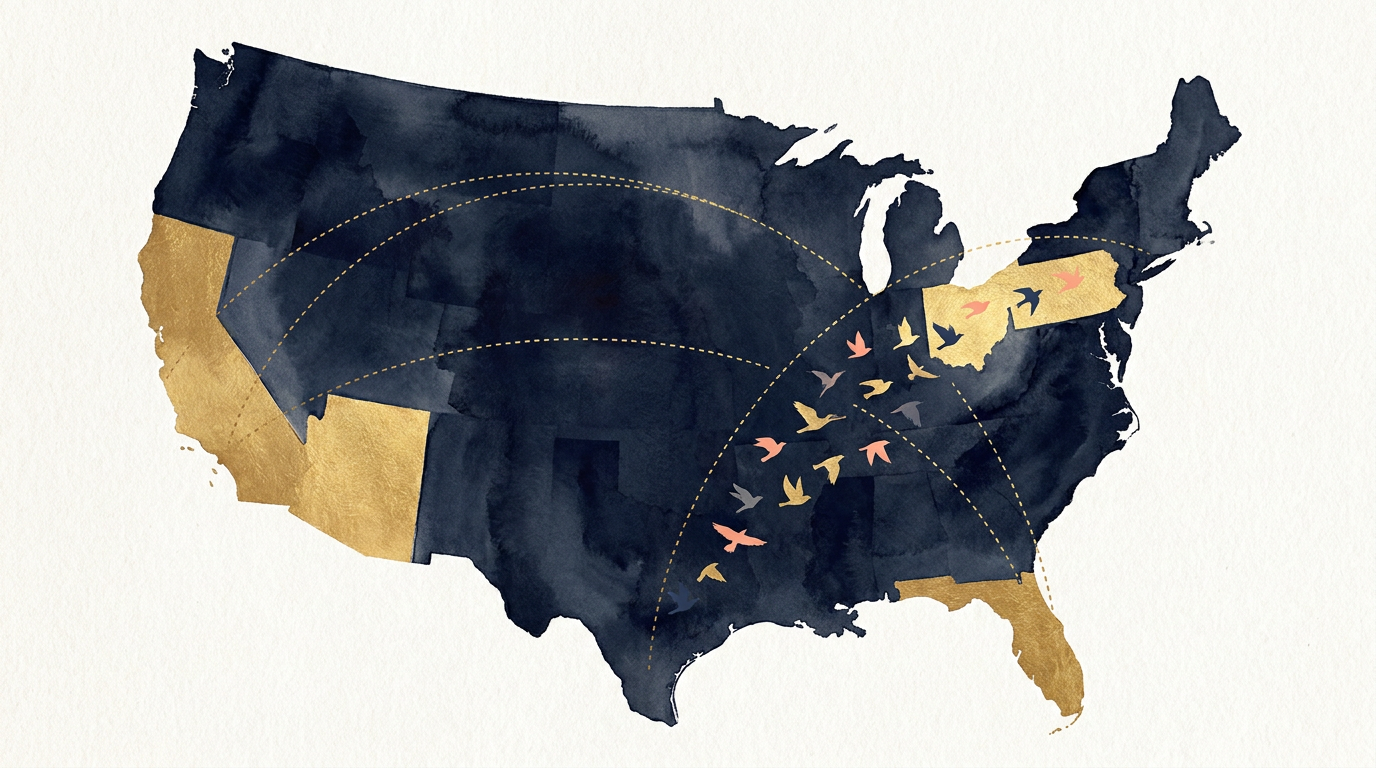
New York loses more residents to Florida than to any other state, and the flow is enormous and consistent. In a recent peak year Florida gained a net ~60,000 tax filers from New York alone — and the average income of those movers was among the highest ever recorded for migrants into the state. Orlando, alongside Miami and Tampa, is one of the top landing spots.

Why New Yorkers make the move: the tax and cost math
Taxes: the difference isn’t marginal
Florida has no state income tax. New York State charges up to 10.9%, and New York City residents add roughly 3.9% on top — a combined rate near 15%. For a household earning $150,000, that’s potentially $15,000–$20,000 a year back in your pocket from day one. There’s no state estate tax in Florida either (New York’s runs up to 16%).
Cost of living: about 40% lower
The cost of living in New York is roughly 63% higher than Orlando. Put differently: a lifestyle that costs $21,000 a year in NYC runs about $12,000 in Orlando. Orlando’s median home price is near $395,000 (single-family $415K–$440K; condos ~$196K), versus New York’s far higher base — and Florida closings take 30–45 days vs. 60–90 in New York.
| Category | New York | Orlando | Takeaway |
|---|---|---|---|
| Median home price | Far higher | ~$395,000 | Roughly half |
| Avg rent | $4,000+ | ~$1,573–$1,802 | Big drop |
| State income tax | ~15% combined (NYC) | 0% | Florida advantage |
| Overall cost | 63% higher | ~3–5% below U.S. avg | Major relief |
Where to land in Orlando: a neighborhood guide
Baldwin Park The NYC-feel pick
A walkable, master-planned village with a real town center, dining, and lakeside paths — the closest Orlando gets to the walkable neighborhood energy New Yorkers crave. Rents run ~$2,030–$2,343.
Winter Park & College Park Charm + schools
Tree-lined, inner-ring neighborhoods with strong public schools, boutiques, and cafe streets (College Park’s Edgewater Drive, Winter Park’s Park Avenue). The family favorites.
Lake Nona New & master-planned
A booming “medical city” and tech hub in the southeast, with new construction, parks, and a healthcare/innovation job base. Modern and amenity-rich.
MetroWest & West Orlando Best value
The budget-stretcher zones — one-bedrooms around $1,517–$1,537, well below the metro average, with easy access to the job cores.
Jobs and the economy
Orlando is one of the nation’s fastest-growing job markets — and it’s no longer just theme parks. Employment is projected to grow ~1.3% in 2026, among Florida’s leaders, with professional and business services now rivaling leisure and hospitality. Healthcare employs 13%+ of the workforce; aerospace, logistics, and technology are rising fast (Lake Nona’s medical/tech cluster is a magnet). Higher-paying roles include software engineers ($85K–$150K), simulation engineers (Orlando is a national modeling-and-simulation hub, $90K–$150K), and video-game developers ($70K–$130K).

Your new home state
Welcome to Florida
The honest trade-offs
- You’ll need a car. Orlando is spread out and car-first; transit is limited and traffic on I-4 is real.
- Hurricane season. June through November — it shapes home insurance, buying diligence, and your first-summer nerves.
- Summers are hot and humid. The flip side of perfect winters; A/C runs constantly.
- Tourism gravity. Some areas are built around the parks; pick a neighborhood (above) that feels residential, not resort.
- Establish residency correctly. New York audits departing high earners — document the move and get professional advice.
Planning the move: logistics, cost, and timing
What it costs by home size
| Home size | Full-service cost | Transit |
|---|---|---|
| Studio / 1-bedroom | ~$2,000–$3,200 | 3–7 days |
| 2-bedroom | ~$3,200–$5,000 | 3–8 days |
| 3–4 bedroom | ~$5,500–$9,000+ | 4–8 days |
2026 corridor ranges; vary with weight, timing, NYC building access, and add-ons.
Timing: when to move
November through April is ideal — great weather, no hurricane risk, and lower rates than peak summer (which runs 20–30% higher). Reserve your crew 4–6 weeks ahead, and if you’re leaving a NYC building, line up the certificate of insurance and elevator/parking reservations early.
Frequently asked questions
How much does it cost to move from New York to Orlando?
Full-service moves typically run $2,600–$8,500+ by size: ~$2,000–$3,200 for a 1-bedroom, $3,200–$5,000 for a 2-bedroom, and $5,500–$9,000 for 3–4 bedrooms.
How far is it and how long does the move take?
About 1,080 miles — a ~17-hour drive over 2–3 days. Movers quote a 3–8 business-day transit window.
Will I save money moving from New York to Orlando?
Almost certainly. Florida has no state income tax vs. a combined NYC rate near 15%, and overall cost of living is ~40% lower. A $150K household can keep $15,000–$20,000 a year. Offsets: home insurance and summer A/C.
What’s the best Orlando neighborhood for New Yorkers?
Baldwin Park for walkable, urban-feel living; Winter Park and College Park for charm and schools; Lake Nona for new construction and a tech/medical job base.
When is the best time to move to Orlando?
November through April — better weather, no hurricane risk, and 20–30% lower rates than peak summer. Book 4–6 weeks ahead.
Keep exploring
Sources: IRS Statistics of Income migration data; Tax Foundation and Empire Center analyses; Orlando Regional REALTOR Association, Redfin and Zillow housing data; U.S. Bureau of Labor Statistics and Orlando Economic Partnership workforce data; published 2026 moving-industry corridor estimates. Current as of 2026; verify tax and residency specifics with a licensed professional. Reviewed by the MovingExperts editorial team.