
San Francisco to Austin is the signature move of the tech exodus — roughly one in five Bay Area tech relocations now lands in Austin. This is the honest, data-backed guide: the real math on what you keep, exactly where to live, the job market (Tesla, Oracle, and a deep startup bench), and what nobody tells you about Texas summers.
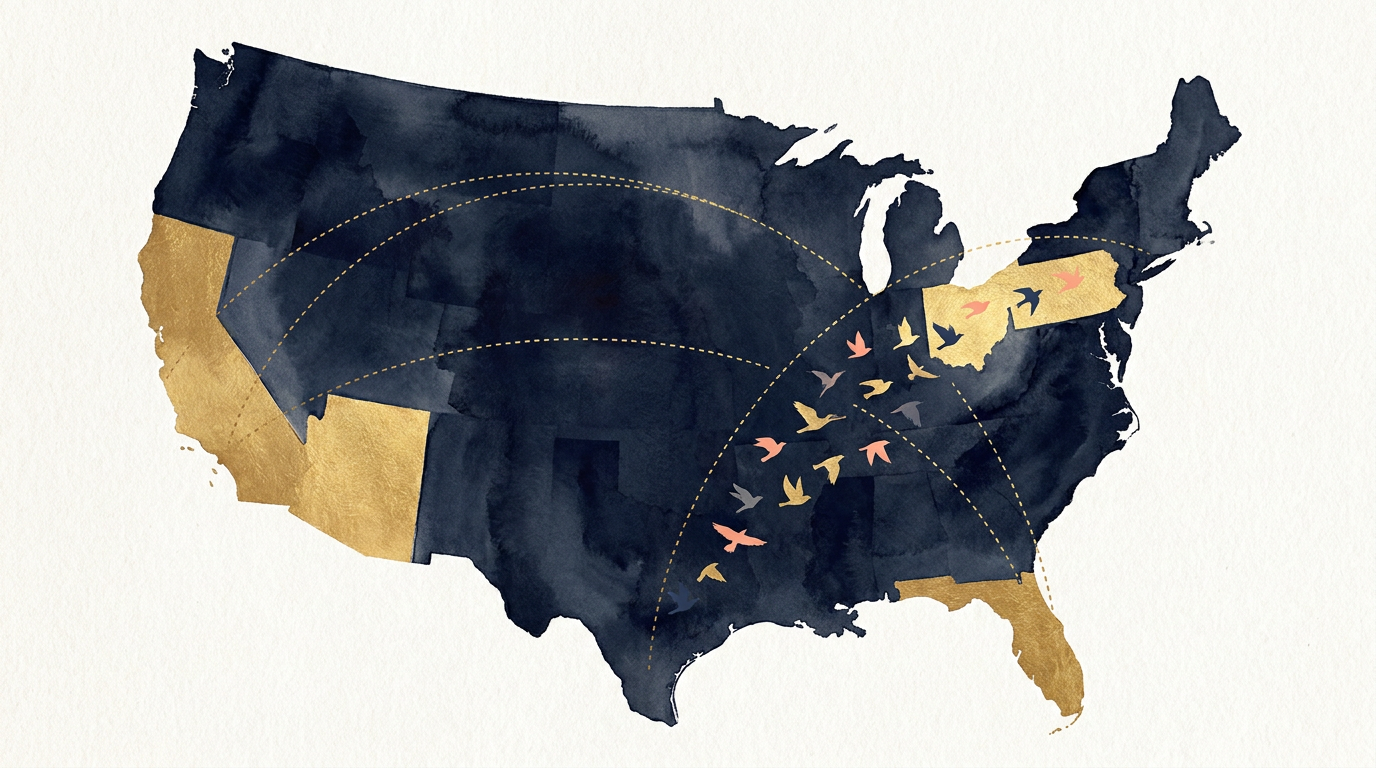
The migration story: the Bay-to-Austin tech pipeline
California-to-Texas is the largest interstate migration in America (~100,000 people a year), and Austin is Texas’s top inflow city — a net +13,980 residents in 2024 (down from +22,219 in 2023, but still leading the state). Around 20% of Bay Area tech relocations go to Austin, drawn by Tesla’s and Oracle’s HQ moves and a maturing startup scene.

Why Bay Area movers make the jump: the math
Taxes & cost
Texas has no state income tax; California’s top rate is 13.3%. Combined with housing, a $150K software engineer leaving San Francisco for Austin pockets over $40,000 a year — enough for a down payment on a $400K Texas home within two years. Most households save $15,000–$25,000 annually between eliminated income tax and cheaper living.
| Category | San Francisco | Austin | Takeaway |
|---|---|---|---|
| Median home price | ~$1,300,000 | ~$500,000–$534,000 | ~60% less |
| 1-bedroom rent | $3,000+ | $1,400–$2,100 | Roughly half |
| State income tax | up to 13.3% | 0% | Texas advantage |
| Cost index | 200+ (highest in U.S.) | ~98 (below avg) | Massive drop |
Illustrative; individual results vary. Note Texas property tax runs ~2.1% effective — higher than California’s — so factor it into any home purchase.

Where to land in Austin: a neighborhood guide
Mueller Bay-Area feel
A master-planned, sustainability-focused neighborhood 3 miles from downtown — walkable streets, a weekly farmers market, and retail built into the plan. The closest thing to a walkable Palo Alto.
Zilker & East Austin Young professionals
Zilker (near Barton Springs, ~$600K median) echoes the Mission’s trendy-outdoors mix; East Austin (~$450K) is the artsy, brewery-dense, Oakland-like pick — more affordable and full of young professionals.
Tarrytown Families
Historic, leafy, near Lake Austin and minutes from downtown — excellent schools, mature trees, and walkable calm. The established-family choice.
Round Rock & Cedar Park Value / suburbs
Suburban value north of the city — one-bedrooms $1,200–$1,600 and family homes for less, with quick access to the tech corridor.
Jobs and the economy
Austin’s tech ecosystem is deep and maturing — one in five workers is in tech, across 10,000+ companies including Tesla and Oracle. Average tech pay is around $105,000, and the scene spans big employers and a real startup bench, so Bay Area transplants land softly. Beyond tech, the University of Texas, healthcare, and state government anchor a diversified base. The pay is lower than San Francisco’s gross, but with no state tax and half the housing cost, take-home goes much further.

Your new home state
Welcome to Texas
The honest trade-offs
- Summer is brutal. Weeks of 100°F+; A/C is a way of life and a utility-bill line item.
- Property taxes are high. ~2.1% effective — no income tax has to be funded somehow. Model it before you buy.
- Growth pains. Traffic, sprawl, and a housing market that ran hot (and has cooled off its peak) — time your buy.
- It’s a driving city. Transit is limited; you’ll commute by car.
- Establish residency correctly. California audits departing high earners — document the move and get advice.
Planning the move: logistics, cost, and timing
| Home size | Full-service cost | Container option |
|---|---|---|
| Studio / 1-bedroom | ~$2,000–$3,200 | ~$1,800–$3,100 |
| 2–3 bedroom | ~$4,000–$6,800 | ~$3,200–$5,200 |
| 4+ bedroom | ~$5,800–$9,000+ | ~$4,800–$6,200 |
2026 corridor ranges; vary with weight, timing, access, and add-ons.
Timing: when to move
Spring and fall dodge the worst heat and peak demand; January–February and November–December offer the best rates. Avoid August–September. Book 4–6 weeks ahead off-peak, 6–8 for summer; a mid-week, mid-month pickup can shave 10–30% off the base rate.
Frequently asked questions
How much does it cost to move from San Francisco to Austin?
Full-service moves typically run $2,500–$9,000+ by size: ~$2,000–$3,200 for a 1-bedroom, $4,000–$6,800 for a 2–3 bedroom, and up to $9,000+ for 4+ bedrooms. Containers are cheaper if you self-pack.
How far is it and how long does the move take?
About 1,750 miles — a ~26-hour drive over 3–4 days. Movers quote a 5–10 business-day transit window.
How much will I save moving from the Bay Area to Austin?
A $150K engineer typically pockets $40,000+ a year between no state income tax (vs. California’s 13.3%) and roughly half the housing cost. Offset: Texas property tax near 2.1% and summer A/C.
What’s the best Austin neighborhood for Bay Area transplants?
Mueller for walkable, master-planned living; Zilker and East Austin for young professionals; Tarrytown for families; Round Rock/Cedar Park for suburban value.
When is the best time to move to Austin?
Spring and fall for weather; January–February or November–December for the lowest rates. Avoid August–September heat and end-of-month pickups.
Keep exploring
Sources: IRS Statistics of Income migration data; Tax Foundation analyses; Redfin, Zillow and local Austin housing data; Built In and Glassdoor tech-salary data; U.S. Bureau of Labor Statistics; published 2026 moving-industry corridor estimates. Current as of 2026; verify tax and residency specifics with a licensed professional. Reviewed by the MovingExperts editorial team.