
Free calculator
Rent a truck, or hire movers?
See real numbers for a New York → Austin move — we factor in real rental-truck fuel burn (a loaded 26-footer gets ~7–8 mpg), one-way rental, hotels, and gear, then compare it to full-service movers.
Every year, tens of thousands of New Yorkers trade the subway for a pickup lane on MoPac. Some chase a tech paycheck that stretches twice as far. Some are done splitting $4,700 rent three ways in Manhattan. And some just want a backyard, live music on a Tuesday, and a tax return that doesn’t have a city surcharge on it. Whatever pushes you onto I-81 South, here is what the New York → Austin move actually looks like in 2026 — the real costs, the real savings, and the trade-offs nobody puts in the brochure.
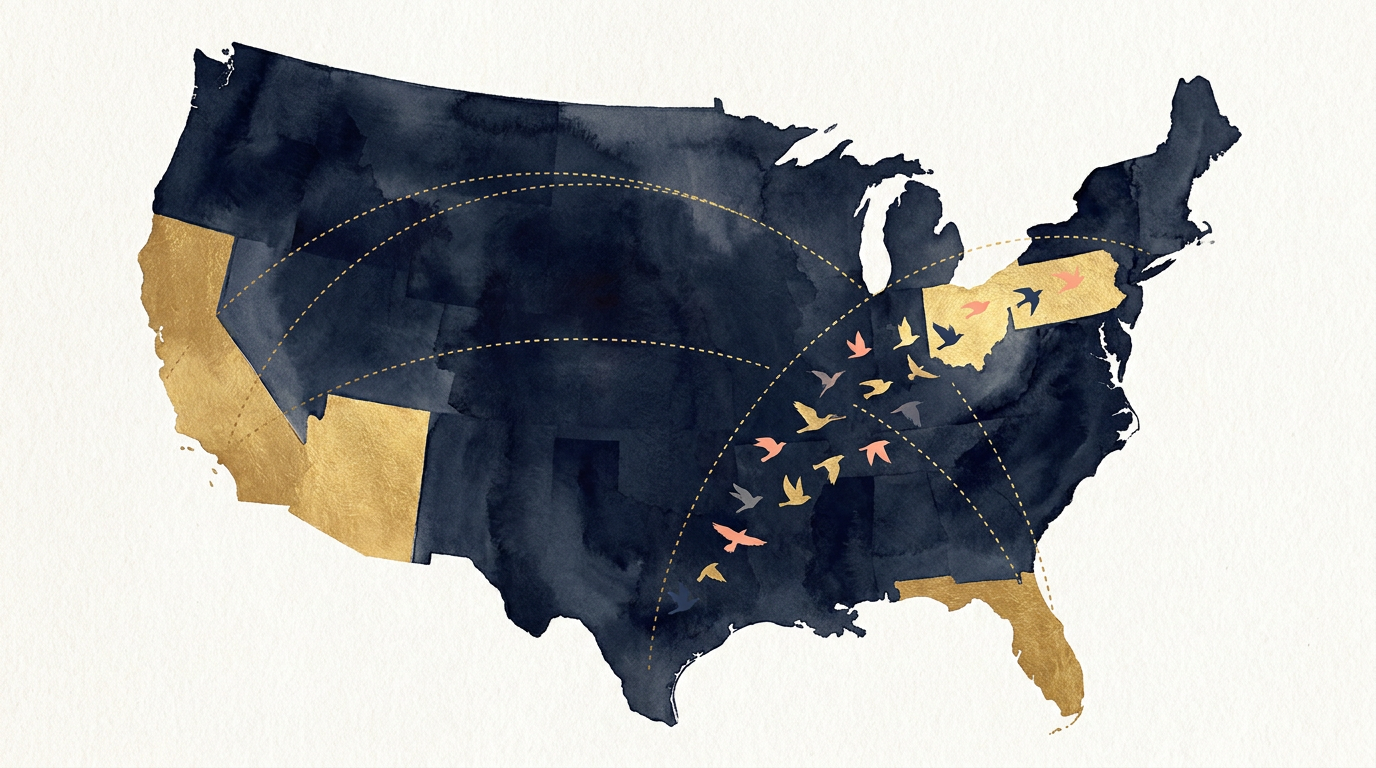
The migration story: the Empire State keeps feeding the Lone Star boom
The New York → Texas corridor is one of the heaviest migration flows in America, and it has been for a decade. IRS tax-return data show that in a single recent year roughly 30,900 New Yorkers moved to Texas, the third-largest source of new Texans of any state — and for every Texan who moved north to New York, about two New Yorkers went the other way. These aren’t struggling households, either: New York movers to Texas reported an average household income around $109,000, well above what migrants from most other states bring with them.
Austin has been a prime landing spot for that flow. The city crossed the one million resident mark in the mid-2020s, joining the dozen largest cities in the country, and Texas as a whole led the nation in domestic migration again in the most recent Census estimates, netting 85,000+ new residents from other states in a single year.
Here’s the honest 2026 nuance: the frenzy has cooled on both ends. The New York metro actually posted its first positive domestic migration in nearly a decade last year, and Austin’s pandemic-era stampede has slowed to a steady march. That’s not bad news if you’re moving now — it means the Austin you arrive in has more housing inventory, softer prices, and fewer bidding wars than the one your friends moved to in 2021. You’re arriving after the correction, not before it.
Who’s actually making this move? Three groups dominate the corridor. Remote and hybrid tech workers who kept a New York salary and moved it somewhere it buys a house. Late-twenties and thirties couples hitting the family-formation wall — the moment a second bedroom in Park Slope costs more than a four-bedroom in Round Rock, the spreadsheet makes the decision. And a steady stream of finance and media professionals converting to Austin’s tech, real-estate, and startup scenes, often taking a title bump to offset the pay adjustment. What they share: almost none of them are leaving because they stopped loving New York. They’re leaving because the math stopped working.

Why New Yorkers make the move: the tax and cost math
The single biggest line item is the one that disappears. New York’s state income tax tops out at 10.9%, and if you live in the five boroughs, the city takes another 3.078%–3.876% on top. Texas takes nothing. For a household earning $150,000 in NYC, that’s roughly $10,000–$14,000 a year that simply stops leaving your paycheck.
| Measure | New York, NY | Austin, TX |
|---|---|---|
| State income tax (top rate) | 10.9% + 3.078–3.876% NYC city tax | None |
| Effective property tax | ~0.9% (NYC’s low assessed values) | ~1.8–2.3% (Travis County) |
| Sales tax | 8.875% | 8.25% |
| Median home price | ~$876,000 | ~$452,000 |
| Median 1-bed rent | ~$4,680 (Manhattan) | ~$1,640 (metro average) |
| Overall cost of living | ~85% higher than Austin | $6,900/mo ≈ $11,500/mo in NYC |
Be honest with the property-tax line, because it’s the catch New Yorkers don’t see coming. NYC’s effective property tax rate is deceptively low because the city assesses homes far below market value; Travis County assesses close to full value and stacks levies from the school district, city, county, community college, and health district. On a $452,000 Austin house, expect roughly $8,000–$10,000 a year in property tax. You still come out well ahead once the income-tax savings and the halved housing cost are counted — cost-of-living indexes put New York about 85% more expensive overall — but Texas is not a no-tax state. It’s a different-tax state.
Run one concrete example. A couple earning a combined $200,000 in Brooklyn pays roughly $12,000 in New York State income tax and about $7,300 in NYC city tax — call it $19,000 before a single federal dollar. The same couple in Austin pays $0 in state and local income tax. If they buy a $452,000 house, property tax claws back roughly $9,000 of that — but a Brooklyn condo at $876,000 wasn’t property-tax-free either, and the mortgage on it would be nearly double. Add everyday costs (groceries, dining, insurance, childcare all meaningfully cheaper), and cost-of-living calculators consistently land in the same place: a $6,900/month Austin lifestyle requires about $11,500/month in New York. That gap is the entire migration story in one number.

Where to land in Austin: a neighborhood guide
Austin is a collection of very different neighborhoods wearing one zip-code prefix. Where you land shapes everything from your commute to whether you ever need a car before noon. Four places New Yorkers gravitate to:
East Austin Creative / Brooklyn energy
The closest thing Texas has to Bushwick-meets-Austin: converted bungalows, natural-wine bars, taco trailers, galleries, and live music within stumbling distance. The East Cesar Chavez and Holly pockets run a median around $550K. If you’re leaving Brooklyn and worried you’ll miss it, start here.
Mueller Walkable / master-planned
Built on the old municipal airport, Mueller is Austin’s walkability unicorn — parks, a lake, farmers’ market, shops, and schools laid out for pedestrians, with walk scores above 70 that almost nothing else in the city with detached homes can match. Median prices sit in the low $600s. Popular with ex-city-dwellers who want to keep living on foot.
Zilker / South Lamar Parks / outdoors
Anchored by Zilker Park and the spring-fed Barton Springs Pool, with the South Lamar corridor’s restaurants and breweries filling in around it. Green space five minutes from downtown — this is the Austin postcard, and it’s priced like one. Expect to pay a premium over the city median for the location.
Round Rock Value / schools / Samsung
The northern suburb where your dollar goes furthest: median active listings around $345K, well-regarded schools, Dell’s HQ in the neighborhood, and Samsung’s massive semiconductor fabs a short drive east. A 30–40 minute commute downtown in exchange for nearly half-price housing.
The housing market reality in 2026
This is where the timing works in your favor. Austin’s median sold price is about $452,000 as of July 2026 — down roughly 18% from the May 2022 peak, the deepest correction of any major U.S. metro. Homes are sitting an average of 70 days on market, and over half of active listings have taken a price cut. Around 17,500 homes are for sale across the metro. Translation: buyers negotiate here now, a sentence nobody has been able to write about New York in living memory.
Contrast the city you’re leaving: New York’s median home price is near $876,000 and still climbing, and Manhattan’s median asking rent crossed a record $4,680 this year. In Austin, the average apartment rents for about $1,640 — a glut of new apartment construction has kept rents flat-to-falling for three years. Renting your first year in Austin while you learn the city is genuinely cheap insurance, and most transplants do exactly that.
What does $452,000 actually buy? In most of the metro: a three-bedroom house with a yard, a garage, and central air — the complete suburban starter kit that costs $1.5M+ anywhere within an hour of Manhattan. Closer in, the same money gets a modern two-bedroom condo or a small bungalow east of I-35. The one thing to watch is insurance and property tax escrow: between Texas’s hail-and-wind insurance premiums and that ~2% tax rate, your monthly payment on a $452K house runs higher than the sticker price suggests. Get a full PITI quote, not just a mortgage rate, before you commit.
Jobs and the economy
Austin’s unemployment rate sits around 3.4%, comfortably below the national ~4.1%, with wages growing about 4.2% a year. Tech is the engine: roughly 180,000 tech workers make up almost 14% of the workforce, the densest concentration in Texas.
- Apple — its billion-dollar North Austin campus is the company’s largest hub outside Cupertino.
- Tesla — Gigafactory Texas east of the airport employs over 20,000 building Model Y and Cybertruck.
- Samsung — the $17B+ Taylor fab northeast of the city is ramping up and hiring through 2026.
- Dell — the metro’s OG tech titan, headquartered in Round Rock with ~14,000 local employees.
- Google, Oracle, IBM, AMD — all with major Austin campuses.
- Non-tech anchors — the University of Texas, the State of Texas, Ascension Seton and St. David’s healthcare systems.
One honest caveat for New Yorkers: Austin salaries are not New York salaries. The metro’s average wage is around $72,000, and outside of senior tech roles, finance, law, and media pay meaningfully less than Manhattan. The math still works because your costs fall further than your income does — but negotiate your offer knowing the cost-of-living conversion cuts both ways.
Your new home state
The honest trade-offs
 No route guide is honest without this section. The things New Yorkers actually struggle with after the boxes are unpacked:
- The heat is real. Average August highs near 97°F, with multi-week stretches above 100°. You will live an indoor-pool-patio summer life from June through September, the inverse of a New York winter.
- You will need a car. There is no subway. CapMetro buses and a single rail line cover slices of the city, but Austin is car-first sprawl. Budget $500–$800/month for a car payment, insurance, and gas you may not be paying today.
- Property taxes sting. That ~2% effective rate on full market value surprises every former NYC owner. Run the numbers before you buy, not after.
- It’s a city of 1 million, not 8.5 million. World-class barbecue and live music, yes — but the museum, theater, restaurant, and late-night depth of New York does not exist here. Some transplants never notice; some never get over it.
- Cedar fever. Every December–February, mountain-cedar pollen flattens newcomers with flu-like allergies. Locals aren’t exaggerating.
- Going home takes a flight. Nonstops from AUS to JFK/LGA/EWR run about 3.5–4 hours. Sunday dinner in Queens becomes a quarterly event, not a weekly one.
Planning the move: logistics, cost, and timing
What a professional New York → Austin move costs in 2026, by home size:
| Home size | Full-service movers | Rental truck (DIY) |
|---|---|---|
| Studio / 1-bedroom | $1,045 – $4,331 | $1,015 – $1,913 |
| 2–3 bedrooms | $4,163 – $6,938 | $1,054 – $2,344 |
| 4+ bedrooms | $5,755 – $9,455 | $1,303 – $2,812 |
Three ways to keep the bill down. Time it right: summer is peak season on this corridor — an October-through-April move can shave 20–30% off the same shipment. Shed before you pack: long-haul pricing is weight-driven, and a Manhattan apartment’s furniture rarely fits a Texas floor plan anyway. Get three binding estimates: quotes on this route vary by thousands of dollars for identical inventories, and a binding estimate protects you from delivery-day surprises. Book 4–8 weeks out — more if you’re moving between May and August.
Two New York–specific logistics notes. First, if you’re leaving a doorman or elevator building, your management company will almost certainly require a certificate of insurance (COI) from your mover before they’ll reserve the freight elevator — confirm your mover can issue one to your building’s exact specifications a week or more in advance, because this is the single most common cause of NYC move-day disasters. Second, think hard before shipping a car you barely use: transporting a vehicle NYC → Austin runs roughly $1,000–$1,500, and many Manhattan transplants sell theirs (or don’t own one) and buy in Texas instead, where registration, insurance, and parking all cost less. Whatever you do, get your Texas driver license and registration sorted within 90 days of arrival — it’s also your ticket to claiming Texas residency for tax purposes, which is the point of the whole exercise.
Frequently asked questions
How much does it cost to move from New York to Austin?
Most professional moves run $1,045–$4,331 for a studio or one-bedroom, $4,163–$6,938 for a two-bedroom, and $5,755–$9,455 for four or more bedrooms. A DIY rental truck runs roughly $1,015–$2,812 plus fuel, lodging, and about four days of driving.
How far is New York from Austin, and how long does the move take?
About 1,750 miles. Driving takes roughly 27 hours behind the wheel — realistically 3–4 days. Full-service van lines typically deliver in 5–10 business days on this corridor.
How much will I actually save on taxes?
New York’s state income tax tops out at 10.9%, plus up to 3.876% NYC city tax; Texas has no state income tax at all. A $150,000 household keeps roughly $10,000–$14,000 more per year. Offset that against Austin property taxes (~1.8–2.3% effective, about $8,000–$10,000 on a median home) — you still come out far ahead, especially as a renter.
What’s the best Austin neighborhood for New York transplants?
East Austin for Brooklyn-style creative energy (~$550K median), Mueller for genuine walkability (low $600s), Zilker for park life next to downtown, and Round Rock for schools and value (~$345K). Most transplants rent centrally for a year before buying.
When is the best time to move from New York to Austin?
October through April. You’ll dodge peak-season moving rates (20–30% savings), skip the brutal first summer, and land during Austin’s best weather. If you must move in summer, book 8+ weeks ahead and load early in the morning.
Keep exploring
Sources: IRS SOI & Census state-to-state migration data; Tax Foundation 2026; Redfin, Zillow & Austin Board of REALTORS® July 2026; Numbeo & BestPlaces cost-of-living comparisons; BLS Austin MSA data; moveBuddha & moveAdvisor 2026 route pricing.