

Free calculator
Rent a truck, or hire movers?
See real numbers for a New York → San Antonio move — we factor in real rental-truck fuel burn (a loaded 26-footer gets ~7–8 mpg), one-way rental, hotels, and gear, then compare it to full-service movers.
San Antonio never shows up first on the lists New Yorkers make. Austin gets the tech headlines, Miami gets the finance crowd, Dallas gets the corporate relocations. And yet the seventh-largest city in America keeps quietly absorbing thousands of Northeasterners a year — because it offers the thing the flashier Sunbelt cities have already priced away: a genuinely affordable life. A median home here costs less than a third of a New York one, the state takes nothing out of your paycheck, and nobody is bidding $50K over asking. Whatever pushes you onto I-81 South, here is what the New York → San Antonio move actually looks like in 2026 — the real costs, the real savings, and the trade-offs nobody puts in the brochure.
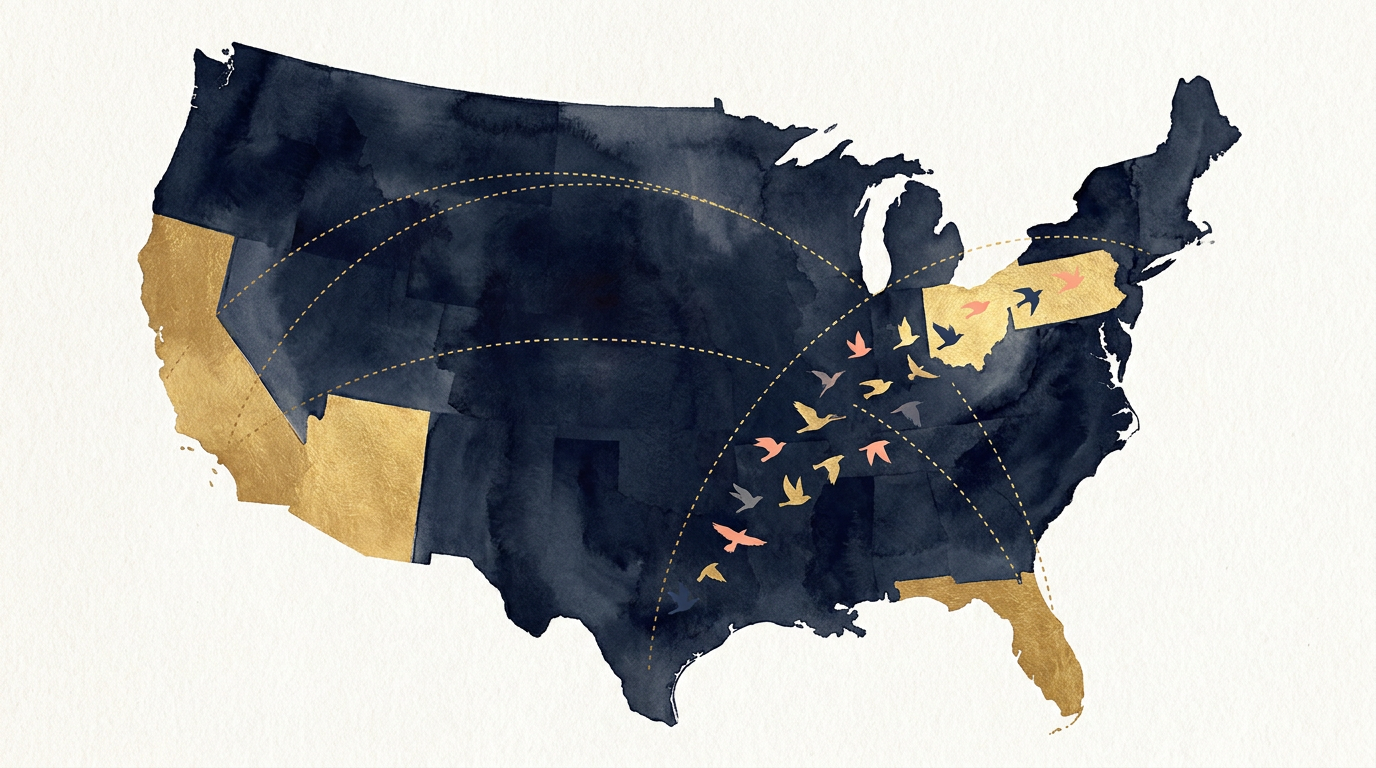
The migration story: a decade of New York → Texas flow
The New York-to-Texas pipeline is one of the biggest domestic migration corridors in the country, and it has been running hot for a decade. Census state-to-state flow data puts New York at roughly 30,000+ movers to Texas per year in recent counts — the third-largest sender state after California and Florida — and New York’s net domestic loss topped 120,000 people in a single recent year. Texas, meanwhile, has led the nation in net migration.
San Antonio’s share of that flow is less publicized than Austin’s or Dallas’s, but it is very real. Bexar County took in nearly 50,000 new residents in a single year at the peak of the boom, and the San Antonio–New Braunfels metro added about 205,000 people between 2020 and 2024 — with roughly 59% of domestic arrivals coming from out of state. In 2024 San Antonio posted the fourth-biggest population gain of any U.S. city. The metro now counts about 2.5 million people and keeps growing even as immigration-driven growth cools.
The honest framing: New Yorkers who choose San Antonio over Austin are usually optimizing for cost, not hype. Austin’s median home price sits around $452K; San Antonio’s is under $270K for a city with a comparable climate, no state income tax, and a 90-minute drive between them. It is the value play of the Texas Triangle.

Why New Yorkers make the move: the tax and cost math
The single biggest line item is the one that disappears. New York’s state income tax runs from 4% to 10.9%, and if you live in the five boroughs, the city takes another 3.078%–3.876% on top — a combined marginal rate that can pass 14.7% for high earners. Texas takes zero. A single filer earning $100K keeps roughly $5,400 more per year; at $150K in NYC, total annual savings estimates run to $14,000+.
| New York, NY | San Antonio, TX | |
|---|---|---|
| State income tax | 4%–10.9% (+ NYC 3.078%–3.876%) | None |
| Effective property tax | Lower rate, far higher values | ~1.8%–2.4% (Bexar Co., district-dependent) |
| Median home price | ~$876K (Redfin, May 2026) | ~$260K (Redfin, May 2026) |
| Average apartment rent | ~$4,835/mo | ~$1,270/mo (RentCafe) |
| Overall cost of living | — | Roughly half of NYC |
The catch — and it’s a real one — is property tax. Texas funds itself through property, and Bexar County’s combined effective rate lands around 1.8%–2.4% depending on your school district, versus a national norm near 1%. On a $300K house that’s $5,400–$7,200 a year. Texas softens it with a $100,000 homestead exemption on school-district value, but budget for the bill. Even so: cost-of-living indexes put New York at roughly double San Antonio overall, and the rent gap alone — $4,835 vs. $1,270 average — pays for a lot of air conditioning.
Where to land: four neighborhoods New Yorkers actually choose
The Pearl & Tobin Hill
WalkableFood & arts~$360K median
The closest thing Texas has to a real neighborhood-bar-and-bodega life. The redeveloped Pearl brewery complex anchors a genuinely walkable district of restaurants, a weekend farmers market, and the Museum Reach stretch of the River Walk. Ex-Brooklynites land here first.
Southtown & King William
HistoricGalleries$300K–$600K
Early-1900s homes, art galleries, First Friday openings, and coffee within walking distance. King William’s Victorian mansions edge toward $600K; surrounding Southtown blocks still start near $300K. Layered, lived-in character master-planned suburbs can’t fake.
Alamo Heights
Top schoolsTree-lined~$700K median
The Park Slope of San Antonio: an independent enclave five miles north of downtown with one of the best school districts in South Texas, Craftsman bungalows, and the McNay Art Museum and Brackenridge Park nearby. The premium is real — and still under Brooklyn money.
Stone Oak
Master-plannedNew constructionMid-$400Ks
The far-north-side option for families: gated communities, wide sidewalks, manicured parks, and highly rated North East ISD schools. It’s car-first suburbia, unapologetically — but you get new construction at prices that don’t exist within 500 miles of Manhattan.
The housing market reality in 2026
San Antonio is one of the few big U.S. metros where 2026 is unambiguously a buyer’s market. Redfin puts the median sale price at $260,000, down about 2.6% year over year; Zillow’s average home value reads ~$251K, down 2.1%. Price per square foot has slipped 4.4% to $151. Homes average around 2 offers and take about 73 days to sell — an eternity by New York standards, and leverage you can use. San Antonio’s median sale price runs roughly 42% below the national average; coming from a market where $876K is the median and inventory is a knife-fight, the adjustment is almost disorienting. Renters do just as well: average rents have actually fallen ~1.6% over the past year.
Jobs & the economy: Military City USA diversifies
San Antonio’s job market doesn’t ride one industry. Joint Base San Antonio — Lackland, Randolph, and Fort Sam Houston combined — is the largest installation in the Department of Defense, with over 80,000 military personnel and 40,000 civilian employees. USAA employs about 19,000 people locally; H-E-B’s headquarters adds 10,000+; Toyota’s south-side plant builds Tacomas and Sequoias with ~3,100 workers. The South Texas Medical Center corridor (Methodist, Baptist, University Health) employs over 60,000, and Port San Antonio hosts 80+ aerospace and cybersecurity firms, including Boeing sustainment operations — the city is one of the nation’s largest cybersecurity hubs outside Washington. Unemployment sat at 4.1% in May 2026. The honest caveat: median household income is about $62K, and salaries run well below New York’s — your savings come from costs, not from a raise. Remote workers keeping Northeast pay get the best of both ledgers.
The honest trade-offs
 No route guide is honest without this section. The things New Yorkers actually struggle with after the boxes are unpacked:
- The heat is real. Average summer highs around 96°F with regular 100°+ stretches from June through September. You will live indoors in August the way you lived indoors in a New York February.
- You will need a car. Probably two. Outside the Pearl–downtown–Southtown core, San Antonio is one of America’s most car-dependent big cities; VIA buses exist, but there’s no rail. Budget for the vehicle you didn’t need in New York.
- Property taxes bite. That 1.8–2.4% effective rate is the price of no income tax. Homestead-exempt and protest your appraisal annually — locals do.
- Paychecks are smaller. Local wages trail NYC by a wide margin. Negotiate relocation with your salary in mind, or bring the remote job with you.
- The pace is different. San Antonio is unhurried, family-oriented, and deeply Tex-Mex in culture. Some transplants find it the friendliest big city in America; others miss the ambition hum. Know which one you are.
Planning the move
| Home size | Professional movers (2026) | Notes |
|---|---|---|
| Studio / 1-bedroom | $2,800–$6,100 | Consolidated shipping saves here |
| 2-bedroom | $3,900–$7,400 | Most common quote band |
| 3-bedroom | $5,000–$8,800 | Full pack adds $800–$1,500 |
| 4+ bedroom | $6,200–$10,500 | Dedicated truck territory |
Two timing notes. First, moving prices spiked roughly 21% in 2026 on fuel costs, so quotes from last year are fiction — get fresh ones. Second, the October–April window runs 15–25% cheaper than summer, and it happens to be San Antonio’s best weather. If you must move in summer, book 8+ weeks ahead and schedule the load-out for early morning.
Frequently asked questions
How much does it cost to move from New York to San Antonio?
Professional movers run about $2,800–$6,100 for a 1-bedroom and $5,000–$10,500 for a 3–4 bedroom home in 2026, per moveBuddha and moveAdvisor route data. Off-season moves (October–April) can come in 15–25% under summer quotes.
How far is San Antonio from New York?
Roughly 1,800 miles — about 27 hours of driving, realistically 2–3 days with overnight stops. Van lines typically deliver in 5–10 business days.
How much will I save on taxes?
Texas has no state income tax. A $100K earner saves roughly $5,400/year versus New York State; NYC residents at $150K can save $14,000+ once the city’s 3.078%–3.876% surcharge is included. Offset: Bexar County property taxes run ~1.8%–2.4% effective.
What’s the best San Antonio neighborhood for ex-New Yorkers?
For walkability and food, the Pearl/Tobin Hill; for historic character, Southtown and King William; for schools, Alamo Heights; for new-construction family suburbia, Stone Oak.
When is the best time to move?
October through April — moving rates drop 15–25%, and you’ll arrive in San Antonio’s pleasant season instead of its 100°F one.
Keep exploring
Sources: Census state-to-state migration data & Census Bureau population estimates 2020–2024; Tax Foundation 2026; Redfin & Zillow May 2026; RentCafe 2026 rent data; Ownwell & Bexar County 2026 tax rates; BLS San Antonio–New Braunfels MSA May 2026; moveBuddha & moveAdvisor 2026 route pricing.