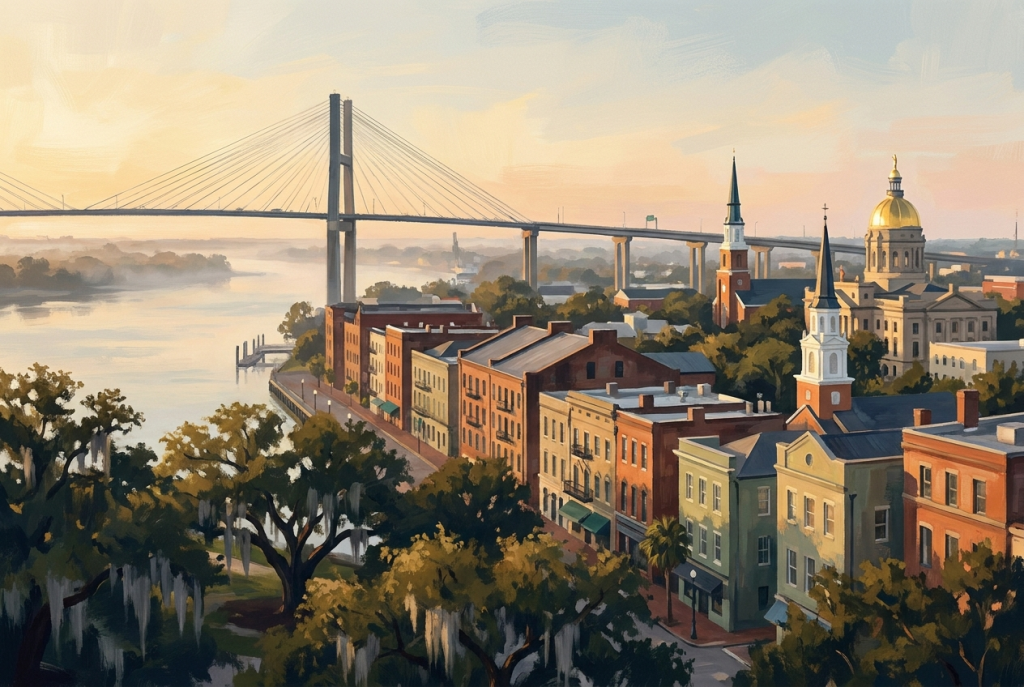
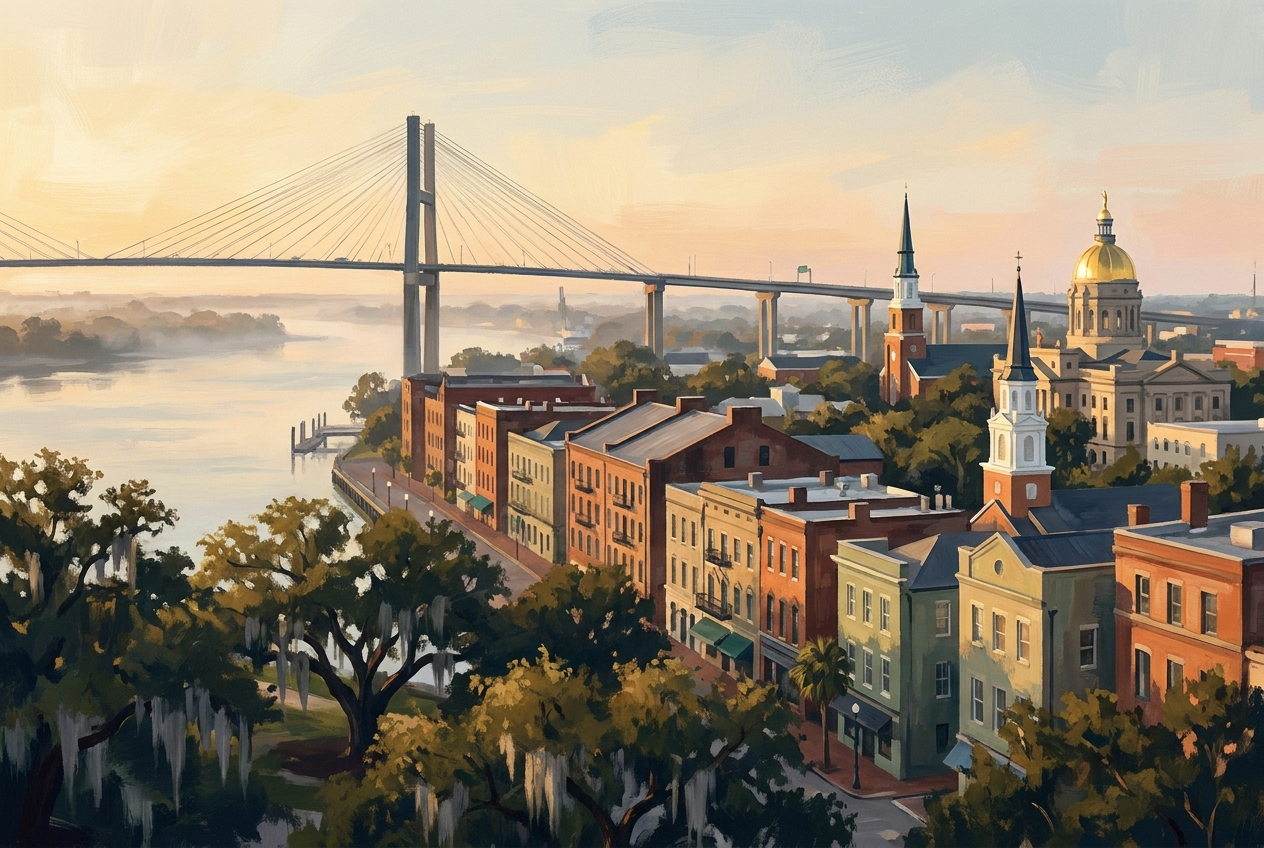

Swapping the express train for a stroll through twenty-two squares draped in Spanish moss is not a small change. But every year, more New Yorkers decide the math — and the moss — are worth it. Here is what the move actually looks like in 2026: real costs, real neighborhoods, real trade-offs.
The migration story: from the five boroughs to the Hostess City
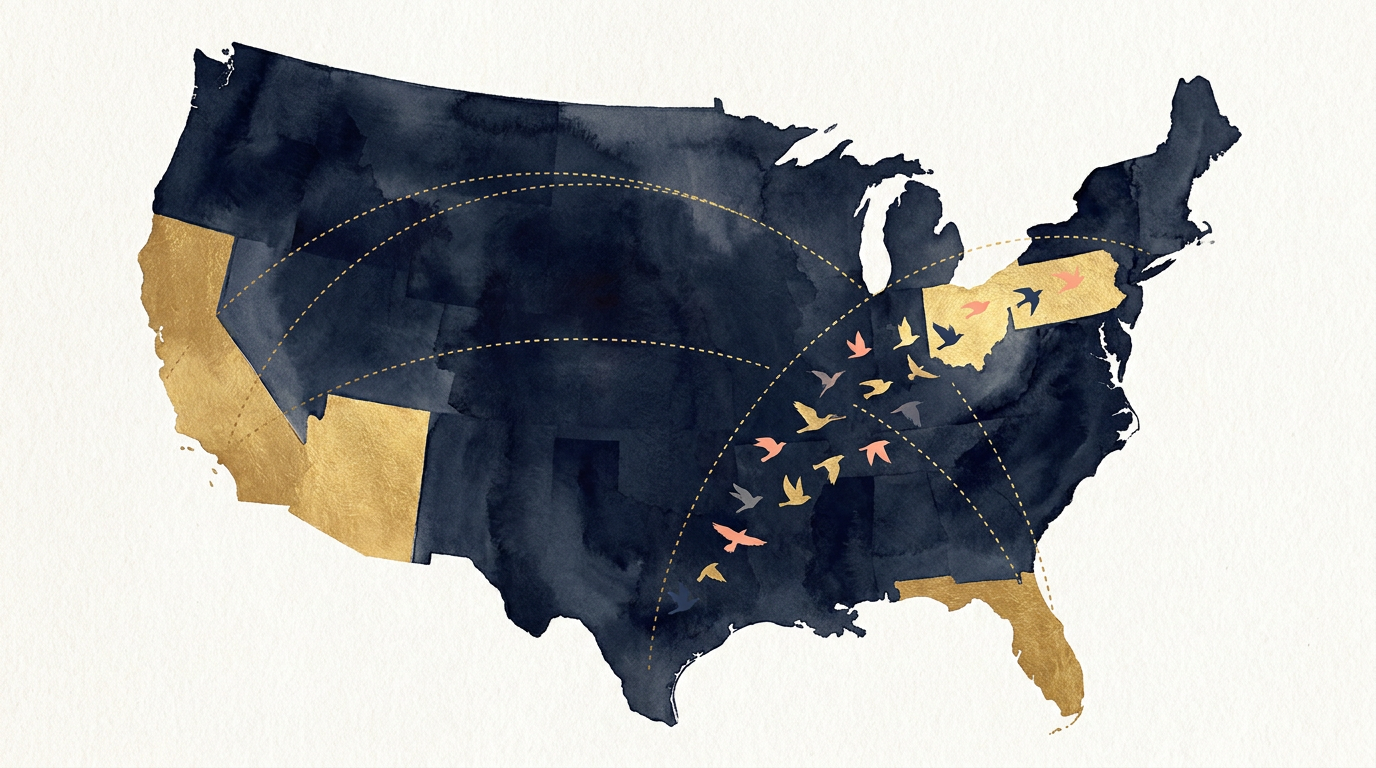
The broad current is well documented. In the most recent IRS migration year (2022–2023), New York State lost a net of nearly 72,000 tax filers to other states — the largest net outflow in the country — while Georgia posted a net gain of roughly 14,700 filers, keeping its place among America’s top landing zones. New York-to-Georgia has been one of the South’s most reliable feeder corridors for a decade, and while metro Atlanta absorbs the largest share, coastal Georgia is the fastest-rising second act.
Savannah’s version of the story has its own flavor. The metro area — Chatham, Bryan, and Effingham counties — has been growing steadily on the back of three engines: the Port of Savannah, Gulfstream Aerospace, and, since 2025, the Hyundai Metaplant west of the city. Suburban Pooler has been called the fastest-growing city in Georgia. Layered on top is a quieter migration of remote workers, retirees, and creative types priced out of Brooklyn who discovered that a restored Victorian near Forsyth Park costs less than a one-bedroom condo in Park Slope.
Who is actually making this move? Three overlapping groups. First, remote and hybrid workers who untethered from Manhattan payrolls after 2020 and realized a Savannah mortgage costs less than a Queens parking spot. Second, retirees and near-retirees cashing out brownstone or co-op equity — Georgia sweetens the deal by exempting up to $65,000 of retirement income per person for those 65 and older, on top of not taxing Social Security. Third, a younger creative cohort orbiting the Savannah College of Art and Design, which enrolls thousands of students downtown and keeps a permanent pipeline of galleries, design studios, and film crews (Georgia’s production tax credit keeps cameras rolling here) that make the city feel far less sleepy than its size suggests.
One honest note: this is not a shrinking-cost story alone. Savannah’s charm is heavily rationed — the Historic District is small, and demand for it is national. What the corridor really offers is a different ratio of money to life: less of the former spent, more of the latter kept.

Why they move: the tax and cost math
Start with the income tax, because it is the cleanest comparison in the country right now. Georgia levies a single flat rate of 4.99% in 2026 — cut from 5.19% under a bill signed in May 2026, retroactive to January 1 — and no Georgia city adds a local income tax. A New York City resident pays a state rate that climbs to 10.9% plus a city tax of up to 3.876% on top: a combined top rate near 14.8%. For a household earning $100,000, the difference works out to roughly $7,000 a year in income tax alone before property taxes enter the picture.
| New York City | Savannah, GA | |
|---|---|---|
| State income tax | 4%–10.9% progressive + NYC 3.078%–3.876% | 4.99% flat, no local income tax |
| Effective property tax | ~1.7% NY state average | ~0.9% Georgia average |
| Median home sale price | ~$876K citywide; ~$1.4M Manhattan | ~$339K (May 2026) |
| Overall cost of living | ~$11,765/mo for a renter’s lifestyle that costs… | …~$6,800/mo in Savannah (Numbeo) |
| Sales tax | 8.875% NYC | 7% Chatham County |
The honest caveat: Georgia taxes groceries less and property lightly, but New York salaries are the highest in the country. If your income is tied to a NYC employer and survives the move (remote work, a transfer), the arbitrage is enormous. If you will be re-entering the local job market, expect Savannah wages to be meaningfully lower — more on that below.
Two more line items New Yorkers always ask about. Car insurance: you will likely own a car in Savannah, and Georgia premiums are middle-of-the-pack nationally — budget for it if you have been car-free. And childcare or private school costs, if relevant, run far below New York rates; public schools vary widely by district, which is a major reason families sort toward Pooler, Richmond Hill, and Effingham County.
Where to land: four neighborhoods that actually fit ex-New Yorkers
Historic & Victorian Districts Most walkable
The reason you fell for Savannah in the first place: the squares, the live oaks, the 1850s townhouses, cafés and SCAD buildings woven through it all. This is the rare Southern neighborhood where a New Yorker can genuinely live without reaching for car keys every day. You pay for the privilege — restored rowhouses command a premium far above the metro median — and you share your streets with tourists, especially on weekends and around St. Patrick’s Day. Best for: downsizing professionals and anyone who refuses to give up walking to dinner.
Starland District Creative energy
A dozen blocks south of Forsyth Park, Starland is Savannah’s Bushwick-in-miniature: murals, coffee roasters, vintage shops, galleries, and a steady supply of SCAD students and alumni keeping the storefronts interesting. Housing is a mix of renovated Victorians and workmanlike cottages, generally cheaper than the Historic District proper. Best for: artists, freelancers, and younger transplants who want personality per square foot.
Ardsley Park Family classic
Savannah’s 1910s streetcar suburb: oak-lined avenues, Craftsman bungalows and brick colonials, kids on bikes, and a five-to-ten-minute drive to downtown. It is the neighborhood long-time Savannahians recommend first for families — established, leafy, and steadily in demand. Best for: families who want charm and a yard without new-subdivision anonymity.
Pooler New-build value
Fifteen miles west, hard against I-95 and the airport, Pooler is the metro’s growth engine — new construction, big-box convenience, and quick access to the Gulfstream campus and the Hyundai corridor. It has been ranked the fastest-growing city in Georgia. You trade character for square footage and a garage. Best for: commuters to the west-side job engines and buyers who want maximum house per dollar. (Honorable mention: Richmond Hill, south of the city, for its schools.)
A note on geography, because it confuses arrivals: “Savannah” in conversation means at least three different price zones. The Historic core and its adjacent districts trade at a steep premium and rarely go on sale. The midtown ring — Ardsley Park, Baldwin Park, the Starland fringe — is where most transplants with a normal budget actually land. And the west-side growth arc (Pooler, Bloomingdale, Port Wentworth) is where the new-construction inventory lives, closest to the Metaplant jobs but furthest from the oaks-and-squares postcard. Decide which Savannah you are buying before you fly down for a weekend of showings.
Housing market reality in 2026
After four frenzied years, Savannah’s market has finally exhaled. Over the three months ending May 2026, the median sale price was about $339,000 — down 3.1% year over year — and metro trackers put values roughly 7–8% below the early-2025 peak. Homes now average around 82 days on market and a single offer, numbers that would have been unthinkable in 2022. Local analysts are calling 2026 a balanced market for the first time in over four years.
For a buyer arriving with New York equity, this is close to ideal: you can negotiate, inspect, and sleep on it. Two structural notes keep prices from falling far, though — the Hyundai-driven jobs boom is still adding demand west of the city, and the supply of genuinely historic housing is fixed forever. The Historic District does not build more 1850s townhouses. Insurance is the line item to watch: coastal wind and flood coverage adds real cost, and it is rising.
Jobs and the economy: jets, containers, and a $7.6-billion bet
Savannah’s economy stands on three legs, all growing. Gulfstream Aerospace designs and builds its business jets here and remains one of the region’s largest private employers. The Port of Savannah is one of the busiest container ports in the nation, feeding a huge logistics ecosystem of warehousing, trucking, and rail across the region. And since late 2024, the Hyundai Metaplant in neighboring Bryan County has rewired the labor market: by early 2026 it employed about 1,400 workers on its way to a target of 8,500 by 2030, with allied suppliers adding another 2,600-plus jobs in Bryan County in 2025 alone. Since the Metaplant was announced, the regional manufacturing base has grown roughly 29%, adding more than 5,400 workers and about $900 million in annual wages.
Add a multi-billion-dollar tourism economy, the Savannah College of Art and Design’s creative gravity, and two hospital systems (Memorial Health and St. Joseph’s/Candler), and the picture is a small metro punching well above its weight. The catch for a New Yorker: outside Gulfstream engineering, port management, and medicine, salaries are set to coastal-Georgia scale, not Manhattan scale. The winning play remains bringing your income with you.
The honest trade-offs
Savannah is not a postcard year-round, and you should move with clear eyes.
- The heat is real. Savannah logs 60-plus days above 90°F in a typical year, with humidity that pushes the heat index past 110°F in deep summer. July and August are indoor months the way January and February are in New York.
- Water is the long-term question. A large share of Savannah-area buildings carry some flood risk, tidal flooding downtown has climbed from a few days a year in the 1990s to more than 20 by recent counts, and hurricane season (June–November) is an annual planning fact. Read flood maps before you fall in love with a house, and price the insurance first.
- You will need a car. Outside the Historic District and Starland, Savannah is a driving city. There is no subway to miss — there is a parking spot to find.
- Bugs and moss come as a set. Sand gnats, mosquitoes, and palmetto bugs are the unadvertised residents below Georgia’s “gnat line.”
- It is small. The metro is under half a million people. The restaurant scene is good and improving; it is not five boroughs deep. The airport is compact, and many flights connect through Atlanta or Charlotte.
- Tourists own downtown on weekends. Roughly festival-scale crowds fill River Street and the squares, peaking around Savannah’s famous St. Patrick’s Day celebration.
Planning the move
| Home size | Full-service mover (typical 2026 range) |
|---|---|
| Studio / 1 bedroom | $1,500 – $3,200 |
| 2 bedrooms | $2,500 – $4,500 |
| 3 bedrooms | $3,500 – $6,000 |
| 4+ bedrooms | $5,500 – $8,800+ |
| Moving container (DIY hybrid) | $1,000 – $4,500 |
| Rental truck (pure DIY) | from ~$750 + fuel and tolls |
On arrival logistics: Georgia gives new residents 30 days to transfer a driver’s license and register the car (bring your title and proof of insurance to a Chatham County tag office). Registering to vote, setting up Georgia Power, and switching your accountant onto Georgia’s flat-tax filing are each one errand, not a bureaucratic season — another small culture shock after New York.
Timing advice: summer is peak season on this corridor — May through August books out and prices up, so reserve 6–8 weeks ahead. Fall and winter moves are cheaper and, frankly, a better introduction to Savannah’s weather. If you are delivering into the Historic District, ask your mover about narrow-street access and parking permits, and avoid arriving during St. Patrick’s week, when downtown logistics grind to a halt.
A practical checklist for this specific corridor: get three written binding estimates (never book on a phone quote); confirm the mover’s USDOT number and interstate authority on the FMCSA database; ask whether your goods travel on one truck or transfer through a consolidation warehouse; photograph everything before it is wrapped; and carry documents, medications, chargers, and a first-night box in the car with you. If you are leaving a walk-up, book your building’s elevator or certificate-of-insurance paperwork with management at least two weeks out — New York building rules remain the most common cause of moving-day delays on this route.
FAQ
How much does it cost to move from New York to Savannah?
Most one- to three-bedroom professional moves land between $2,500 and $6,000 in 2026, depending on volume, timing, and access at both ends. Studios can come in under $2,000; large four-bedroom homes can exceed $8,000. Containers ($1,000–$4,500) and rental trucks (from about $750) are the budget alternatives.
How far is Savannah from New York, and how long does the move take?
About 810 miles — roughly 12 hours of driving straight down I-95. Full-service movers typically deliver in 2–7 days on this route.
How much will I actually save on taxes?
Georgia’s 2026 income tax is a flat 4.99% with no local add-on; NYC residents pay up to 10.9% state plus up to 3.876% city. A $100,000 household saves roughly $7,000 a year in income tax, plus more from Georgia’s lower property-tax rates (~0.9% vs ~1.7% effective).
What’s the best Savannah neighborhood for someone leaving New York?
For walkability, the Historic and Victorian Districts are unmatched. Starland suits creative types; Ardsley Park is the classic family pick; Pooler offers the most new-build house per dollar near the region’s biggest job sites.
When is the best time to move to Savannah?
October through April: mover prices drop after the summer peak, and you skip arriving in 95-degree humidity. Book 6–8 weeks ahead regardless, and steer clear of St. Patrick’s week downtown.
Keep exploring
Sources: IRS SOI state migration data (2022–2023); U.S. Census Bureau; Tax Foundation state tax data 2026; Georgia HB 463 (2026); Redfin & Zillow Savannah market data, May 2026; Numbeo cost-of-living comparison 2026; Bloomberg and Harvard Growth Lab reporting on Hyundai Metaplant America; Georgia Ports Authority; moveBuddha & Freightwaves 2026 route cost data; ClimateCheck.